



No products in the cart.
Return To Shop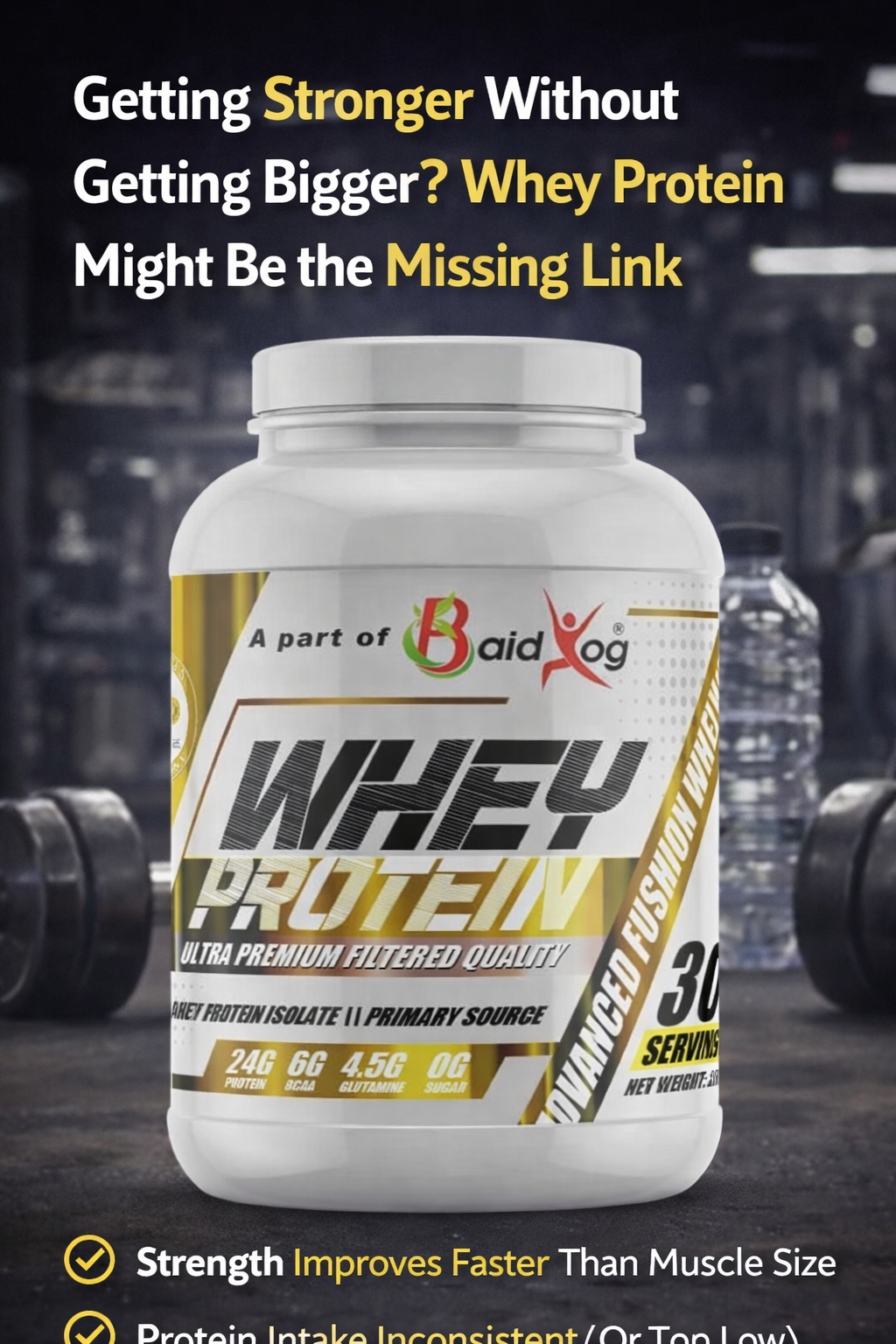
Whey Protein Might Be the Missing Link
You’re lifting heavier than before.
Your strength is improving.
Your workouts feel solid.
But when you look in the mirror, muscle size hasn’t changed the way you expected.
This is one of the most common—and confusing—phases in fitness. And no, it doesn’t mean your effort is wasted. It usually means your body is adapting faster than your nutrition is supporting it.
Let’s break this down simply.
Strength Improves First—Here’s Why
When you start training seriously, your body becomes neurologically efficient before it becomes visually muscular.
In simple words:
- Your brain learns how to use existing muscle better
- Muscle fibers fire more efficiently
- Coordination and technique improve
That’s why strength increases quickly—even without visible muscle growth.
This phase is normal.
But to move from strength gains → muscle size gains, your body needs the right building material.
That’s where whey protein steps in.
Muscle Size Needs More Than Just Heavy Lifting
Lifting weights creates muscle damage (this is good).
But muscle growth only happens when your body repairs that damage properly.
For that repair process, your body needs:
- Enough protein
- High-quality amino acids
- Proper timing
- Consistency over weeks—not days
If protein intake is low or inconsistent, your body prioritizes recovery—not growth.
You get stronger, but muscles don’t expand.
Why Food Alone Often Isn’t Enough
In theory, food can meet protein needs.
In reality, most people fall short.
Common issues:
- Skipped meals
- Low protein breakfasts
- Busy schedules
- Digestive discomfort from heavy foods
This creates a protein gap—small but impactful.
Whey protein fills that gap efficiently.
What Whey Protein Actually Does (No Hype)
Whey protein is fast-digesting and rich in essential amino acids, especially leucine, which plays a key role in muscle protein synthesis.
It helps by:
- Supporting post-workout muscle repair
- Improving recovery speed
- Helping muscles grow thicker over time
- Making daily protein intake easier
But here’s the key point many miss:
👉 Whey protein doesn’t build muscle overnight.
It supports the process when everything else is already in place.
Why Muscle Size Takes Longer Than Strength
Muscle growth is slow by design.
Your body needs:
- Repeated stimulus (training)
- Enough protein daily
- Calorie support
- Time to adapt structurally
Strength = nervous system adaptation
Size = physical tissue growth
Tissue growth takes patience.
If protein intake fluctuates, muscle size progress slows—even if strength keeps rising.
How Whey Protein Bridges the Gap
This is where whey protein becomes the missing link.
It ensures:
- Muscles get protein when they need it most
- Recovery stays consistent
- Growth signals remain active
Best times to use whey protein:
- Post-workout (most important)
- Morning, if breakfast is light
- Between meals, to hit protein goals
At Baidyog Pharmacy, whey protein is designed to be:
- Easy to digest
- Smooth to mix
- Suitable for everyday fitness—not just athletes
This makes consistency easier—and consistency drives results.
Common Mistake: Expecting Too Much, Too Fast
Many people quit whey protein too early because:
- They expect visible size in weeks
- They focus only on scale weight
- They ignore recovery and sleep
Muscle growth shows up quietly—then suddenly.
Stick with it.
How to Support Real Muscle Growth
Keep it simple:
✔ Progressive training
✔ Balanced meals
✔ Whey protein post-workout
✔ 7–8 hours of sleep
✔ Patience
When these align, muscle size follows strength—naturally.
Final Thought
If you’re getting stronger but not bigger yet, don’t doubt your training.
More often than not, nutrition—not effort—is the missing piece.
Whey protein doesn’t replace hard work.
It supports it—day after day.
Baidyog Whey Protein is crafted for people who train consistently and want clean, honest support for real progress—without unnecessary hype.
👉 Shop Baidyog Whey Protein and give your muscles what they need to grow—properly, steadily, and sustainably.
Consistency builds strength.
Nutrition builds size. 💪




Add comment