


No products in the cart.
Return To Shop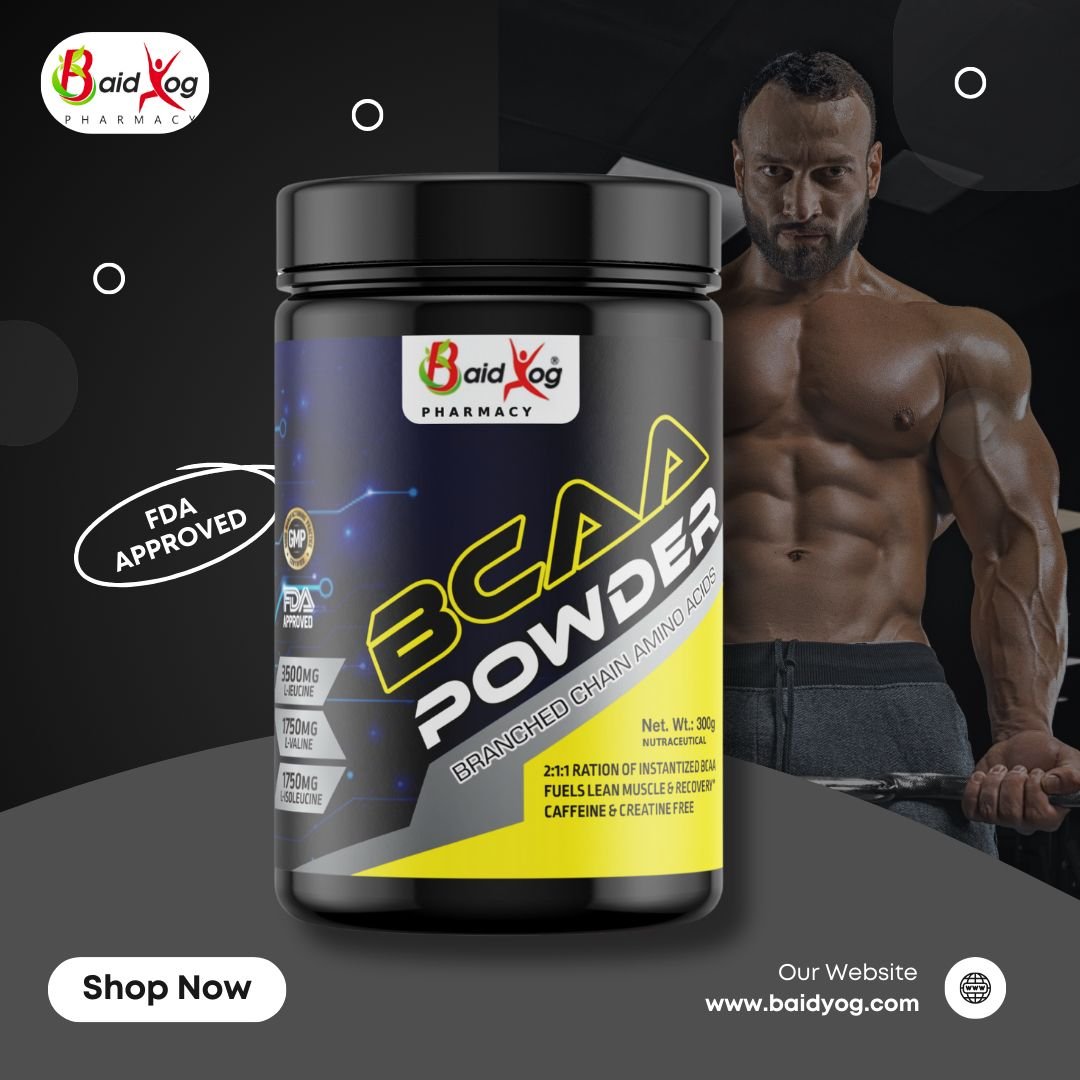
Do You Need BCAA If You’re Already Taking Protein?
If you go to the gym regularly, chances are you already have protein powder in your daily routine.
But sooner or later, almost everyone ends up asking the same question:1
“If I’m already taking protein, do I really need BCAA as well?”
- Some people swear by it.
- Some say it’s useless.
- And the internet? It only makes things more confusing.
So let’s slow things down and explain this in simple, honest language, without hype or complicated science.
First Things First: What Is Protein?
Protein is basically food for your muscles.
When you consume protein—whether it’s whey or plant-based—your body breaks it down into amino acids.
These amino acids are what your muscles actually use to recover and grow.
They help with :
- Building muscle
- Repairing muscle after workouts
- Improving recovery
And yes, protein already contains BCAA, along with other essential amino acids.
At Baidyog Pharmacy, protein formulations are made to provide a complete amino acid profile, so your body gets steady support for daily training and recovery.
So What Exactly Are BCAAs?
BCAA stands for Branched Chain Amino Acids, which include:
- Leucine
- Isoleucine
- Valine
These three amino acids play a special role because they are directly used by your muscles during workouts.
BCAAs are known to help with:
- Reducing muscle breakdown
- Improving workout endurance
- Supporting faster recovery
This is why many people use BCAA during training, especially when workouts are intense.
If Protein Already Has BCAA, Why Take Them Separately?
The answer comes down to timing and purpose.
Protein supplements:
- Take time to digest
- Work best after workouts or between meals
- Support long-term muscle growth
BCAA supplements:
- Absorb quickly
- Work best before or during workouts
- Help reduce fatigue while you train
That’s why some athletes and regular gym-goers choose to use both—not because one replaces the other, but because they’re used at different times.
When You Probably DON’T Need Extra BCAA
You may not need additional BCAA if:
- You already meet your daily protein needs
- Your meals are protein-rich
- Your workouts are short or moderate
- You eat properly before training
For many beginners, a good protein supplement and a balanced diet are more than enough.
This is why brands like Baidyog focus on clean, balanced protein products that support everyday fitness goals without unnecessary complexity.
When BCAA Can Actually Help (Even If You Take Protein)
There are situations where BCAA can be useful:
1. Training on an Empty Stomach
If you train early in the morning or do fasted workouts, BCAA can:
- Help protect muscles
- Provide quick support without feeling heavy
2. Long or Intense Workouts
If your sessions go beyond an hour or are very demanding, BCAA can:
- Reduce muscle fatigue
- Help you maintain performance
3. Fat Loss or Cutting Phase
When calories are low, muscle loss becomes a risk.
BCAA can help support lean muscle preservation during dieting.
At Baidyog, BCAA formulations are designed to be easy to mix, light on the stomach, and suitable for intra-workout use, especially for active lifestyles.
Protein vs BCAA: Keep It Simple
Protein
- Complete nutrition
- Supports muscle growth over time
- Best taken after workouts
BCAA
- Fast-absorbing
- Supports endurance and recovery
- Best taken during workouts
👉 They don’t compete with each other—they serve different roles.
So, Do You Need Both?
For most people:
- Protein is the foundation
For more serious or intense training:
- Protein + BCAA can offer extra support
The key is choosing supplements that fit your routine, not following trends blindly.
Final Takeaway
You don’t automatically need BCAA just because you take protein.
But if you:
- Train hard
- Train fasted
- Want better endurance and recovery
Then adding BCAA can make sense.
At Baidyog, the focus is on simple, honest supplementation—products that work alongside proper diet, consistent training, and real fitness goals.




Add comment